


On this page
What is remote water quality monitoring?
Remote water quality monitoring uses autonomous sensor technology to track critical environmental parameters (such as pH, turbidity, dissolved oxygen, and nitrates) in real time without requiring a physical presence at the site. These systems typically use telemetry to transmit data from isolated locations (like river intakes, reservoirs, or coastal outfalls) to a central cloud dashboard. Modern solutions overcome traditional infrastructure barriers by utilising solar power and multi-network connectivity (4G/5G and satellite), enabling utilities and industries to ensure continuous compliance and detect pollution events instantly, even in off-grid areas.
The Challenge: Monitoring the Unreachable
For over fifty years, PMA Ltd has been at the forefront of the UK instrumentation and chemical manufacturing sectors. We know that the most critical water data often lies in the hardest-to-reach places.
Whether you are monitoring a remote river intake in the Scottish Highlands or a storm overflow on the Cornish coast, the story is often the same. There is no mains power, and cellular signals are weak or non-existent. Historically, this meant either expensive civil engineering to lay cables or infrequent manual sampling (which often misses short-term pollution events).
With our deep experience in engineered measurement systems, we are proud to announce a groundbreaking solution that removes these barriers entirely.
The Solution: Autonomous Solar Kiosks for TriOS for Remote Water Quality Monitoring
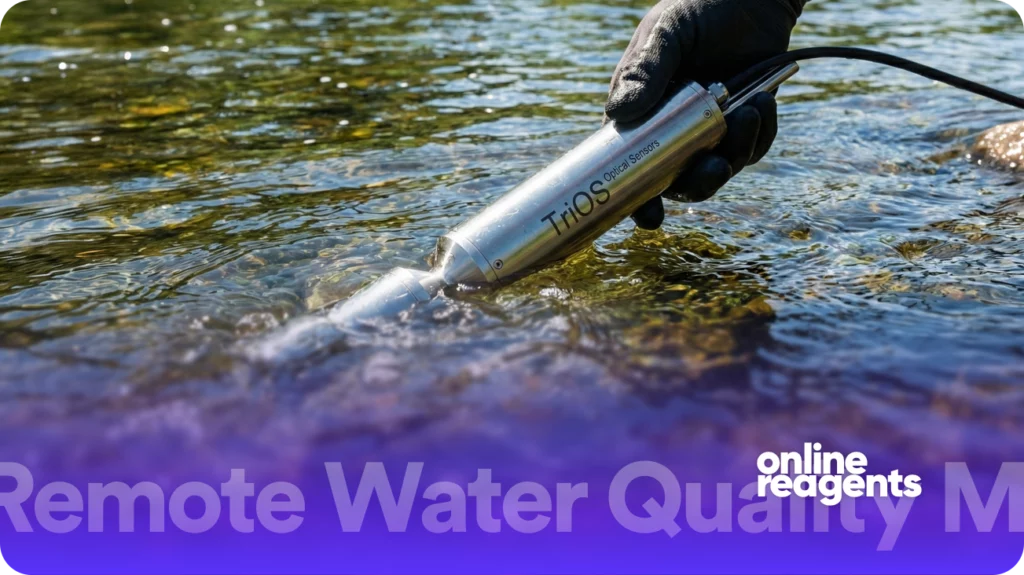
PMA can now offer a fully autonomous remote monitoring package designed explicitly for our TriOS product range. We have engineered a secure, robust kiosk system that serves as a complete field station for your instrumentation.
This is not just a box with a battery; it is a sophisticated data hub. Here is what makes this system unique.
What Is Inside the Cabinet?
We have designed these kiosks to be flexible, powerful, and reliable. The system is built around three core pillars:
1. The “Pick and Mix” Sensor Capability
You can configure the station with the exact instrumentation required for your application. The system supports high-end optical sensors, including:
- TriOS OPUS: For spectral analysis of nitrogen and carbon compounds.
- NICO plus: Precision nitrate monitoring.
- LISA UV: For organic load and SAC254 measurement.
- VIPER, enviroFlu, and TTurb: For turbidity, fluorescence, and other critical indicators.
2. The Intelligent Controller
At the heart of the kiosk is the TriOS TriBox3. This powerful controller features four channels and comprehensive connectivity options, including Ethernet and RS-485 (Modbus RTU). It handles 4–20 mA inputs and relay outputs, serving as both a local brain and a data logger.
3. Robust Power Management
The unit runs on a solar PV and battery system explicitly sized to the site’s location and load. It utilises MPPT charge control and fused DC distribution to ensure maximum efficiency. We also include remote power monitoring, so you always know the health of your battery bank.
Unrivalled Connectivity: 4G/5G and Satellite Backup for remote water quality monitoring
Data gaps are unacceptable in modern compliance monitoring. Our system ensures your data gets through regardless of the conditions.
- Primary Comms: The system uses 4G/5G LTE with dual-SIM failover. This ensures that if one network provider goes down, the system automatically switches to another.
- The Ultimate Fallback: If cellular networks fail, the system features Iridium® satellite failover. This guarantees global coverage.
- Data Integrity: We use encrypted transport for security. The system also features “store-and-forward” buffering: if a connection is temporarily lost, the data is stored and transmitted once the connection is restored.
Built for the Great British Weather
These units are designed for harsh environments. The outdoor enclosure features tamper-proof, IP-rated glands and surge protection to safeguard the electronics.
To reduce site visits, we include advanced maintenance aids. These include nano-coated sensor windows to repel dirt, W55 wipers or air purge systems to keep lenses clean, and automated alarms that trigger upon fouling or communication loss.
Ideal Applications
This technology is perfect for any location where mains power is unavailable or too costly to install. We are currently deploying these for:
- River and catchment nodes: Continuous monitoring of raw water quality.
- Raw-water intakes and Boreholes: Protecting drinking water sources.
- Reservoir inlets: Managing compensation flows.
- Industrial outfalls: Trade effluent kiosks for compliance reporting.
- High-risk sites: Airport runoff, refinery discharge, and cooling-water separators.
- Nature-based solutions: Remote lagoons, reed beds, and nature-based treatment assets.
Visualise Your Data with PMA
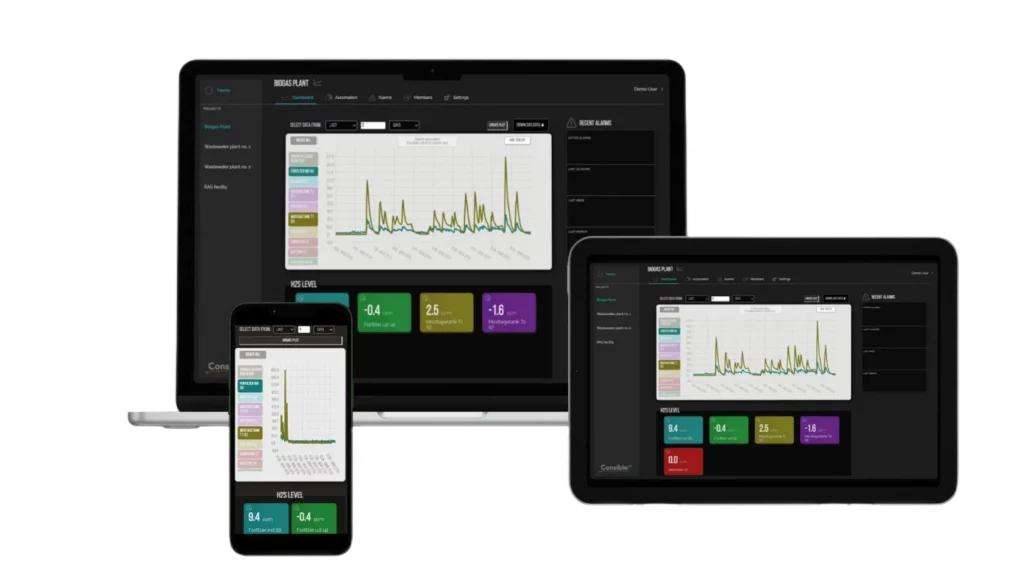
Collecting data is only the first step. We have an innovative, cloud-based dashboard that is the easiest way to view data and manage your water system surveillance.
Our solution integrates seamlessly with our data logger, providing you with a modern, cloud-based interface. You can export data to your SCADA historian, route alarms via SMS or email, and even use our API for third-party analytics.
Frequently Asked Questions (FAQs)
How does the system handle power in winter?
The power system utilizes Solar PV paired with a battery and MPPT charge control. We size the solar-battery system specifically to the site’s geography and the power draw of the sensors, employing low-power duty cycles to ensure operation continues even during darker winter months.
What happens if the mobile signal is lost?
We have a three-stage safety net. First, the dual-SIM allows switching between mobile networks. Second, the system has Iridium® satellite backup for areas with no mobile signal. Finally, the “store-and-forward” buffering ensures that if all transmission fails temporarily, no data is lost; it is uploaded when the connection returns.
Can I integrate this data into my existing SCADA system?
Yes. The controller supports standard protocols like Modbus RTU (RS-485) and 4–20 mA. Additionally, the cloud platform supports API access, HTTPS/MQTT, and export functions, making it easy to feed data into your existing historian or third-party analytics software.
What maintenance does the system require?
We have designed the system to minimise maintenance. Features like nano-coated sensor windows, automatic W55 wipers, and air purges keep the sensors clean. The system also sends service logs and alarms if fouling is detected, so you only visit the site when necessary.
Ready to Deploy?
Don’t let a lack of power or signal stop you from getting the data you need for remote water quality monitoring.
Discover how our autonomous systems can transform your monitoring strategy here:
Remote Water Quality Monitoring with Solar Power Kiosks